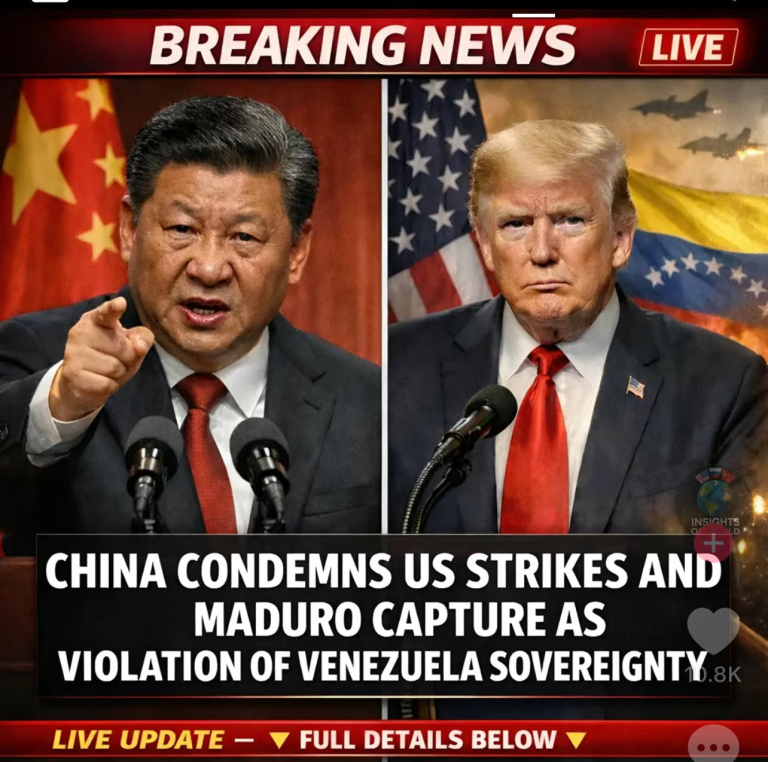
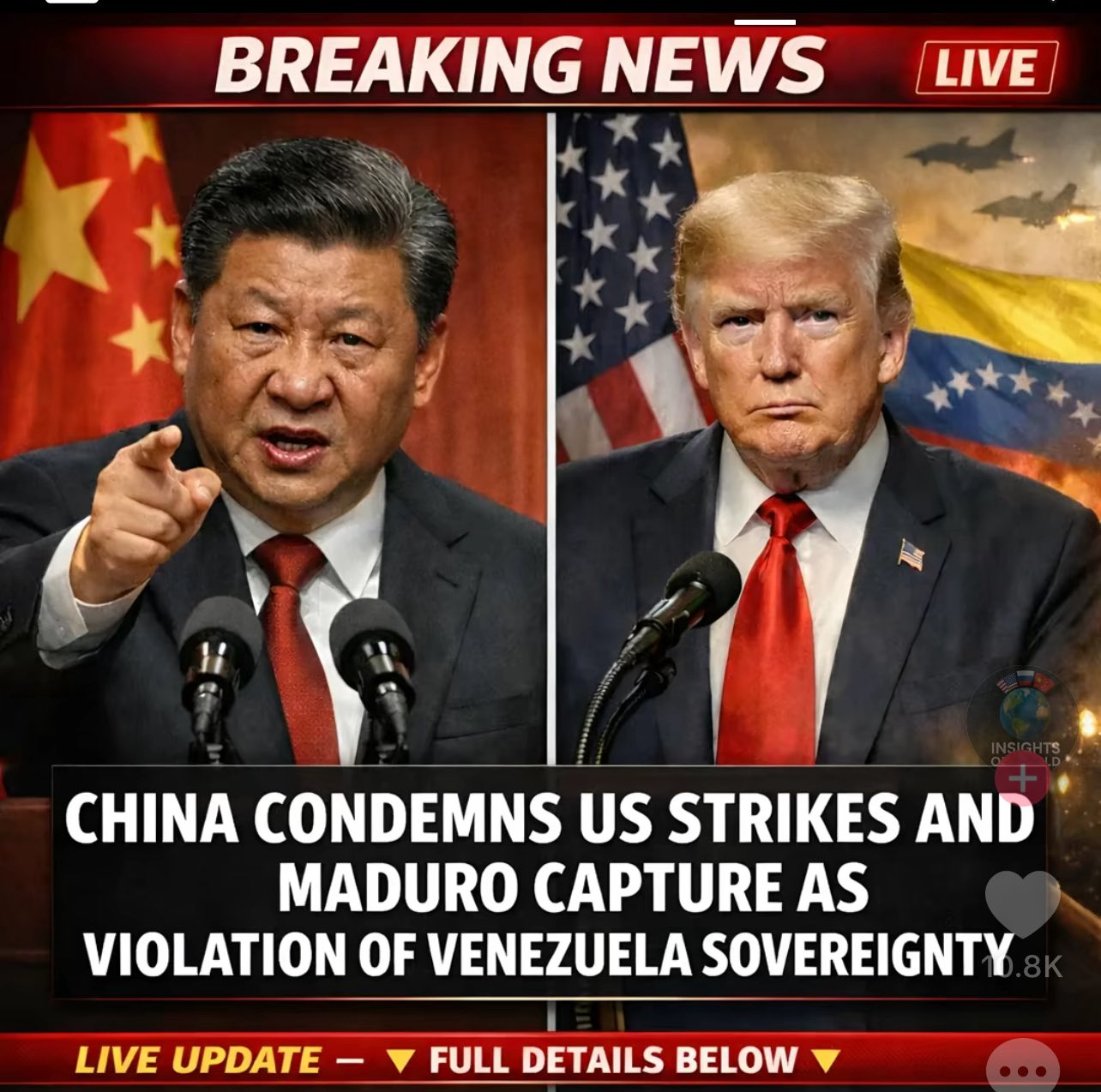
The world is once again holding its breath after explosive reactions followed reports of U.S. actions linked to Venezuela’s leadership crisis. According to rapidly circulating claims, Washington’s involvement surrounding Venezuelan President Nicolás Maduro has triggered fierce condemnation from Beijing, pushing global tensions into a new and uncertain phase.
China, led by Xi Jinping, issued strong statements accusing the United States of violating Venezuela’s sovereignty and interfering in internal affairs. Chinese officials warned that such moves could destabilize not only Latin America, but also the broader international order. The language used was unusually sharp, signaling that this was not just routine diplomatic disagreement — but a serious geopolitical warning.
On the other side, former U.S. President Donald Trump has remained defiant in public messaging associated with the unfolding narrative. Sources close to U.S. policy circles claim Washington views its actions as part of a broader effort to “restore stability” and “protect democratic principles,” though critics argue those justifications have been used many times before with devastating consequences.
Venezuela has long been a flashpoint between global powers. Rich in oil, strategically located, and politically divided, the country has become a symbol of a larger struggle between Western influence and the growing reach of China and its allies. Beijing has invested billions in Venezuelan infrastructure and energy projects, making any perceived threat to Caracas a direct challenge to Chinese interests.
What has amplified the situation is the speed at which images, headlines, and dramatic claims have spread across social media. “Breaking News” banners and bold visuals are fueling panic, debate, and speculation — even as verified details remain limited. Analysts warn that misinformation could further inflame an already volatile situation, pushing nations toward reckless decisions.
Experts say this moment could mark a turning point. If China chooses to escalate diplomatically or economically, the fallout could ripple through global markets, energy prices, and international alliances. Meanwhile, Latin American nations are watching closely, fearful that Venezuela could once again become the stage for proxy conflicts between superpowers.
Despite the intense rhetoric, some diplomats are urging restraint. Behind closed doors, there are reportedly efforts to de-escalate tensions and avoid any scenario that could spiral into open conflict or w*r-like consequences. Still, history suggests that once public threats are made, stepping back becomes politically difficult.
For now, the world waits. Will this confrontation cool down through negotiations — or is this the beginning of a far more dangerous global showdown? One thing is certain: the Venezuela crisis has once again proven how quickly regional events can shake the entire planet.