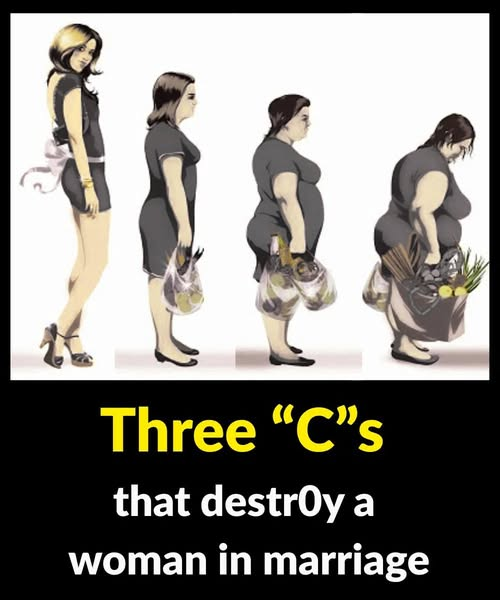
Marriage can be a beautiful journey filled with growth, love, and shared experiences. At its best, it provides safety, companionship, and a place where both partners are encouraged to become the strongest version of themselves. But when certain destructive patterns creep in, they slowly erode a woman’s sense of self, emotional security, and trust. Over time, this erosion can leave deep emotional wounds that are often difficult to heal. While every relationship is unique, there are recurring emotional patterns that frequently contribute to a decline in a woman’s well being within marriage.
In particular, three subtle yet powerful behaviors, often called the Three Cs, can quietly but profoundly damage a woman emotionally and relationally. These behaviors often begin small, almost unnoticed, but they grow in influence as the relationship progresses.
Constant criticism functions much like water dripping on stone. It may seem harmless at first, but its long term effect can be devastating. When a woman is repeatedly criticized in her marriage, whether about how she looks, how she parents, how she cooks, how she works, how she speaks, or even how she expresses emotion, she begins to internalize the belief that she is never good enough. Unlike healthy feedback or respectful communication, criticism often carries judgment, blame, and a lack of empathy rather than care or problem solving.
Over time, this pattern damages her confidence and her emotional stability. She may begin to censor herself, fearing that anything she says or does will be used against her. She may feel as though she is constantly walking on eggshells, unsure of how to avoid the next negative remark. The emotional connection between partners weakens as resentment replaces closeness, and the marriage becomes more about survival than partnership.
Replacing criticism with constructive communication is essential. Speaking with respect, listening with patience, and recognizing her efforts help rebuild emotional safety. Encouragement has far more power to inspire change than constant fault finding ever will.
The second destructive behavior is comparison.
Few things wound a woman more deeply than being compared to someone else, whether that person is a former partner, another woman, a friend’s spouse, or even a family member. When she hears statements such as “Why can’t you be more like her” or notices her partner idealizing someone outside the relationship, the message is clear and painful. You are not enough.
Comparison plants seeds of insecurity and self doubt that grow quickly. It can feel like emotional betrayal because the person she trusted most is the one diminishing her value. It creates an impossible standard that she never agreed to compete with and strips away the appreciation of who she truly is.
The damage is profound. Emotional intimacy begins to collapse. Anxiety and sadness may increase. Some women withdraw emotionally while others struggle silently, feeling invisible and replaceable even within their own marriage. A home that should feel safe instead becomes a place of constant emotional tension.
Honoring the person you chose to marry is vital. When individuality is celebrated rather than compared, a woman feels seen, valued, and secure.
The third behavior, though not yet discussed here, often completes the cycle of emotional harm. Together, these patterns form a quiet but powerful force that can deeply affect a woman’s heart, her confidence, and the foundation of the marriage itself.