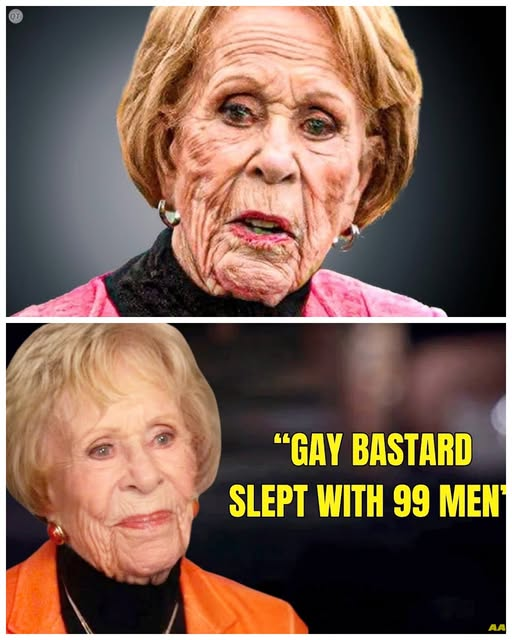
In the dazzling, often tumultuous world of Hollywood’s golden age, where stars rose to the peak of their fame only to face the harsh realities of competition and ego, one name stood out as a symbol of unrelenting talent, charm, and resilience—Carol Burnett. A comedic genius, Burnett captivated millions with her warmth, wit, and unparalleled ability to bring humor to every role she played. Her legacy as one of television’s most iconic figures is undisputed.
But behind the laughter, the smiles, and the applause was a story that few dared to explore—a story of tension, rivalry, and a simmering animosity that would go on to shape the trajectory of her career. This is the story of how Carol Burnett came to loathe one man more than anyone else: her long-time co-star, Harvey Korman.
The Beginning of a Comedy Legacy
It was the early 1970s, and television audiences were in for a treat with “The Carol Burnett Show,” a variety program that would become one of the most beloved shows in television history. Carol Burnett was at the helm, and alongside her was a group of talented individuals, including Harvey Korman, who would soon become an integral part of the ensemble.
Korman was a powerhouse in his own right, known for his impeccable timing, his over-the-top characters, and his ability to elevate any sketch he was part of. Together, Burnett and Korman created some of the most memorable sketches in television history, laughing alongside their audience and making America smile every week.
But like many collaborations that seem perfect on the surface, the undercurrents of competition were slowly beginning to stir. As the years went by, the friendly banter that characterized their professional relationship began to fray, unraveling into something darker. The cracks were first visible during the 1975 season.
The 1975 Season: A Turning Point
As “The Carol Burnett Show” soared in popularity, so did the egos involved. Carol Burnett, who had long been the face of the show, began to feel the pressure of her success. She wasn’t just a comedian anymore—she had become a brand, a symbol of comedic excellence and television dominance. Expectations were high, and with that came a sense of responsibility, but also a palpable weight.
For Harvey Korman, however, the rising tension was felt in a different way. While Carol thrived in the limelight, Harvey began to feel the need for recognition beyond his supporting role. It was clear he had the talent to shine on his own, but the spotlight always seemed to favor Carol. As their career paths continued to cross, Harvey started to crave independence, longing to break free from Burnett’s shadow. What had been a harmonious working relationship began to sour as their personal and professional dynamics shifted.
Rehearsals, once lighthearted and collaborative, grew increasingly tense. Carol Burnett would deliver her lines with precision, only to be met with Harvey’s sarcastic quips. Their once effortless camaraderie started to feel more like a battle for control. Every joke, every punchline, became a symbol of the growing rift between them. What had once been a space for inspiration became a battleground of egos and resentment.
The Feud That No One Expected
As the seasons wore on, the whispers about their deteriorating relationship grew louder. The tension between Burnett and Korman became the subject of backstage gossip. Hollywood insiders and production crew members noticed the subtle shifts in their interactions. Gone were the days of shared laughter and spontaneous humor. In their place were harsh exchanges and cold silences. What had begun as playful teasing slowly turned into something more bitter, and it was no longer just a mild rivalry—it had become a full-fledged feud.
It wasn’t just about humor anymore. The entire chemistry of the show was changing. As the ratings soared and the pressure mounted, the previously unspoken divide between Carol and Harvey reached a boiling point.
The true extent of their conflict came to light during a particularly charged moment in 1975 when the tension finally broke in front of a live audience.
The Live Performance That Changed Everything
The stakes were higher than ever. The show had become a television staple, and the audience’s expectations were immense. Carol Burnett, ever the professional, was determined to remind the world why she was at the top of her game. She had an incredible sense of timing and an innate understanding of what worked on stage. But that night, as the cameras rolled, everything was about to change.
It was a special live performance, and the pressure to deliver was palpable. Carol took center stage, flashing a brilliant smile, her usual grace evident despite the weight of the moment. But just as she reached the peak of her performance, something unexpected happened.
In an audacious move, Harvey Korman, unsatisfied with merely supporting Carol in this sketch, launched into an impromptu skit that derailed Carol’s routine. He stepped into the spotlight, stealing the moment, and completely throwing off the pacing of the show. The audience, initially surprised, fell into an awkward silence as they processed what had just happened. Carol, visibly taken aback, tried to regain control, but Harvey was relentless.
For the first time, what had once been an act of collaboration between two talented comedians felt like a personal attack. The studio, once a place of creative synergy, was now a battlefield. The laughter that filled the room moments before turned to uneasy murmurs. The chaos on stage was palpable. It was no longer comedy; it was a statement.
The Fallout: Public Betrayal
In the aftermath of the performance, the media quickly seized upon the drama. Headlines were filled with rumors of a deepening rift between the two stars. Fans, once devoted to the beloved duo, were left wondering if the lighthearted humor they had adored for years had merely been a facade. What was once considered a perfect partnership now seemed like a broken relationship, fractured by jealousy, ego, and resentment.
Carol Burnett, who had always been known for her grace under pressure, found herself facing the harsh reality of her situation. She had been vilified, not just by the media but by some of the very people who had once supported her. Hollywood, as glamorous as it appeared, could be an unforgiving place. Expectations were high, but the reality of being at the top was often lonely and filled with personal struggles.
Yet, rather than succumbing to the overwhelming negativity and doubt, Carol Burnett did what she had always done best—she channeled her pain into her work. The following season, she returned with renewed vigor, crafting sketches that were sharper, more daring, and full of emotional depth. Her comedic timing had never been better, and each performance became a testament to her resilience.
The Healing Process: From Rivalry to Respect
In the years that followed, the scars of their feud remained, but so did the love for their craft. Carol and Harvey both eventually came to terms with their rivalry. They recognized that the tension that had once driven them apart had also pushed them to be better, to challenge each other in ways that might never have happened without that animosity.
While the wounds of their conflict never fully disappeared, the two stars began to find a new understanding. What was once a bitter rivalry slowly transformed into a partnership grounded in mutual respect. The years had taught them both valuable lessons about humility, about recognizing each other’s strengths, and about the importance of collaboration in the face of adversity.
Together, Carol Burnett and Harvey Korman became an iconic duo again—not defined by their past resentments, but by their shared history and mutual respect for each other’s talents.
The Legacy of Carol Burnett and Harvey Korman
As the years went by, the animosity that once defined their relationship faded into the past. The feud, once the stuff of Hollywood gossip, became a footnote in the larger story of two comedians who had transcended their personal differences and become legends of the entertainment world.
Carol Burnett went on to have an illustrious career, continuing to perform, direct, and create. Her influence in television and comedy remained unmatched, and her ability to turn personal struggles into universal stories became one of her greatest strengths.
Harvey Korman also found success in other projects, but his association with Carol Burnett remained one of his defining roles. They had created something together that no one could take away: a legacy of laughter, resilience, and creativity.
The Redemption: An Unlikely Alliance
In the final years of their careers, Carol Burnett and Harvey Korman stood side by side, not just as colleagues, but as friends. The animosity that had once plagued their relationship was replaced by a deeper understanding of the importance of collaboration. They had faced their demons, and in doing so, had forged an even stronger bond.
Their story, which began with rivalry, became a tale of redemption and reconciliation. Through their shared history, they taught the world that even the most intense of conflicts could lead to growth, understanding, and the potential for renewal.
In the end, the story of Carol Burnett and Harvey Korman is not just a story of hatred and rivalry. It is a testament to the power of resilience, the capacity for change, and the ability to transform adversity into something truly beautiful. Their laughter, which once felt fractured, returned—richer and more meaningful than ever before.
And as they took their final bows, it was clear that their story, much like the very nature of comedy itself, had come full circle.